
Short answer: A 3 pin Type 2 EV charging cable has two separate compatibility questions: the Type 2 end must match the vehicle inlet, and the UK plug end must be used only with a suitable electrical supply. Accessoryup lists a locked Type 2 configuration with a UK plug, a 3.5 kW rating and a 5.5 m cable. It does not publish a vehicle list, rated current, socket requirement, protection functions, ingress rating or certification. Confirm the car handbook, the exact socket arrangement and the full cable route before ordering; the connector names alone do not establish safe or universal compatibility.
Map the connection from socket to car
Start with the physical path rather than a vehicle badge. The product page confirms a UK plug at the supply side and a locked Type 2 configuration at the vehicle side. A Type 2 inlet on the car is therefore an essential check, but it is not the only one. The manufacturer does not specify compatible makes, models or model years.
The supply side needs equal attention. Electrical Safety First advises that a dedicated EV chargepoint is the safest home option and warns that ordinary socket-outlets may not be designed for the extended load and duration of EV charging. The listing does not say whether a particular socket must be BS 1363/EV, independently assessed or on a dedicated circuit.
| Connection point | Published detail | Check before buying |
|---|---|---|
| Vehicle end | Locked Type 2 configuration | Exact inlet in the vehicle handbook |
| Supply end | UK plug | Socket type, circuit suitability and electrician advice |
| Cable reach | 5.5 m | Parking position and a route clear of doors and walkways |
| Electrical rating | 3.5 kW | Vehicle acceptance and supply requirements |
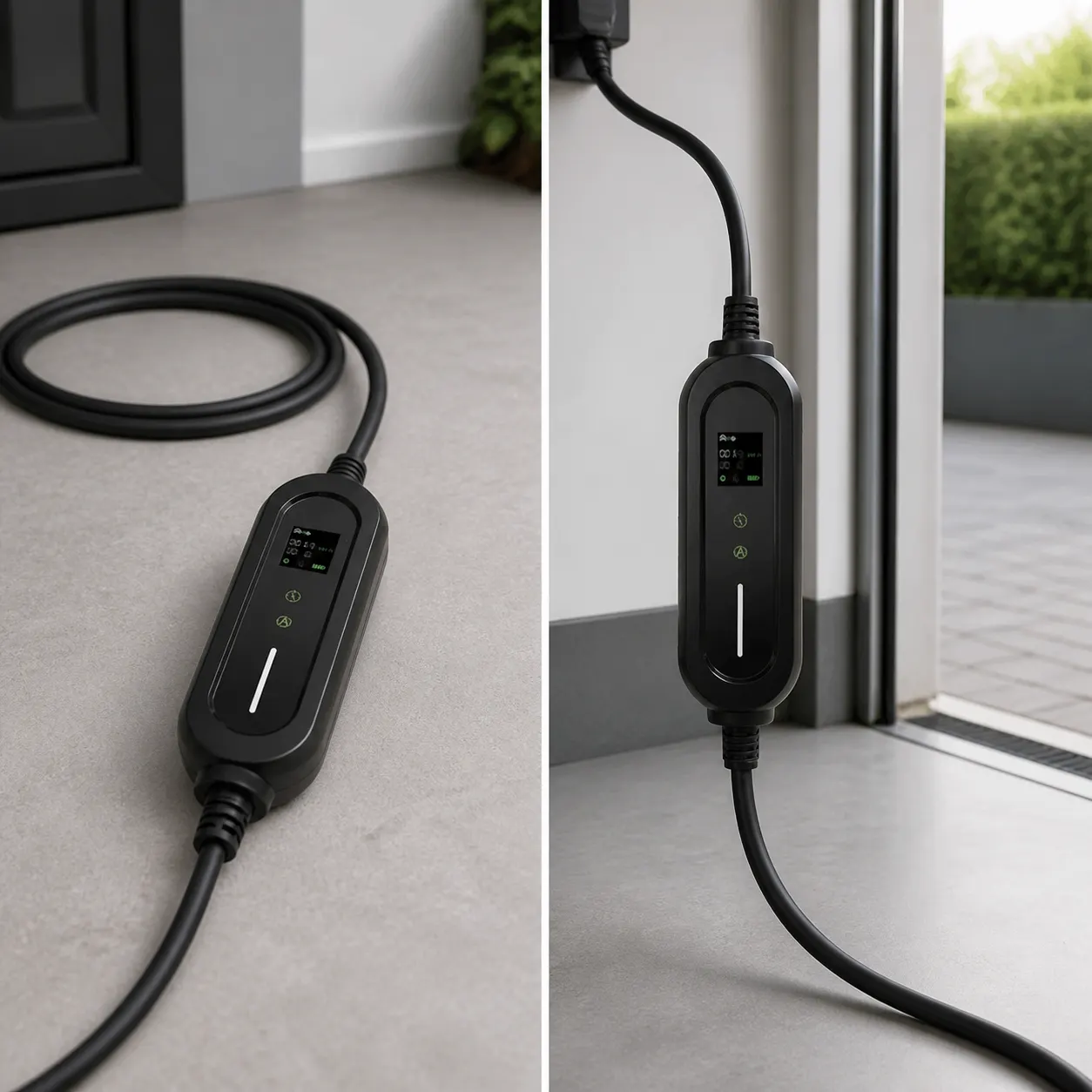
Measure the 5.5 m route before ordering
A quoted cable length is useful only when measured along the route the cable will actually take. Allow for the height and position of the socket, the vehicle's charge-port location and a relaxed bend at each end. Do not plan around a cable stretched tightly across a threshold, shared path or public pavement.
The product page gives 5.5 m as the cable length but does not publish connector dimensions, control-box dimensions or minimum bend guidance. Manufacturer does not specify those measurements, so confirm that the complete assembly can be placed without strain, crushing or a trip obstruction.
Separate the listed rating from charging results
Accessoryup lists a 3.5 kW charging rating. That is a product-page figure, not a promise that every connected car will receive 3.5 kW throughout a session. Vehicle settings, onboard charging limits, supply conditions and thermal or protective controls can affect charging, and the page does not provide a charging-time table.
Manufacturer does not specify rated current, voltage tolerance, energy efficiency, control behaviour or charging time. Do not calculate a journey-ready time from the 3.5 kW label alone, and do not infer that the product meets a named standard unless matching documentation is supplied.
- Check the vehicle handbook for the inlet and permitted charging equipment.
- Ask what electrical supply and socket specification the cable requires.
- Confirm the protections, markings and instructions supplied with the exact unit.
- Leave charging speed and duration open where the manufacturer does not specify them.
Limits and checks before buying
The documented configuration may fit a vehicle with a confirmed Type 2 inlet where a suitable UK supply is available within the measured 5.5 m route. It should not be presented as compatible with every Type 2 vehicle or every domestic socket.
Manufacturer does not specify IP protection, residual-current protection, earth monitoring, temperature protection, plug standard, certification, warranty terms or outdoor-use limits on the current product page. Obtain those details and competent electrical advice where required before relying on the cable.
Related guides and product details
Buy this connection format only after the vehicle inlet, electrical supply and full 5.5 m route have all been confirmed for the intended parking place. Read Portable EV Charger for Visiting Family: UK Checks for related guidance. Read Type 2 Portable EV Charger with UK Plug: Buyer Check for related guidance. Review the documented specification on the Type 2 3.5 kW 5.5 m Portable EV Charging Cable with UK Plug product page before ordering.
Sources and safety context
- Supports the Type 2 and UK plug configuration, 3.5 kW rating, 5.5 m length and documented product limits. Current Accessoryup portable EV charging cable product page.
- Supports checking the home charging supply, avoiding assumptions about standard sockets and preferring suitable dedicated charging arrangements. Electrical Safety Advice for Electric Vehicles.
- Provides official context for Type 2 AC charging outlets and UK installation standards without establishing this product's compliance. Residential chargepoints: minimum technical specification.